
Skincare 101: Everything You Need to Know to Start Your Journey
Stepping into the world of serums, acids, and moisturizers can feel incredibly overwhelming. With thousands of products promising flawless results, where exactly do you begin? If you are entirely new to this space, or if you have previously tried a complicated 10-step routine only to end up frustrated, you are in the right place.
Welcome to Skincare 101: Everything You Need to Know to Start Your Journey. This comprehensive guide is designed to cut through the industry noise, debunk common myths, and provide you with a practical, science-backed approach to achieving your healthiest complexion yet. Mastering skincare 101 isn’t about buying the most expensive products; it is about understanding your unique complexion and choosing the right ingredients to support it.
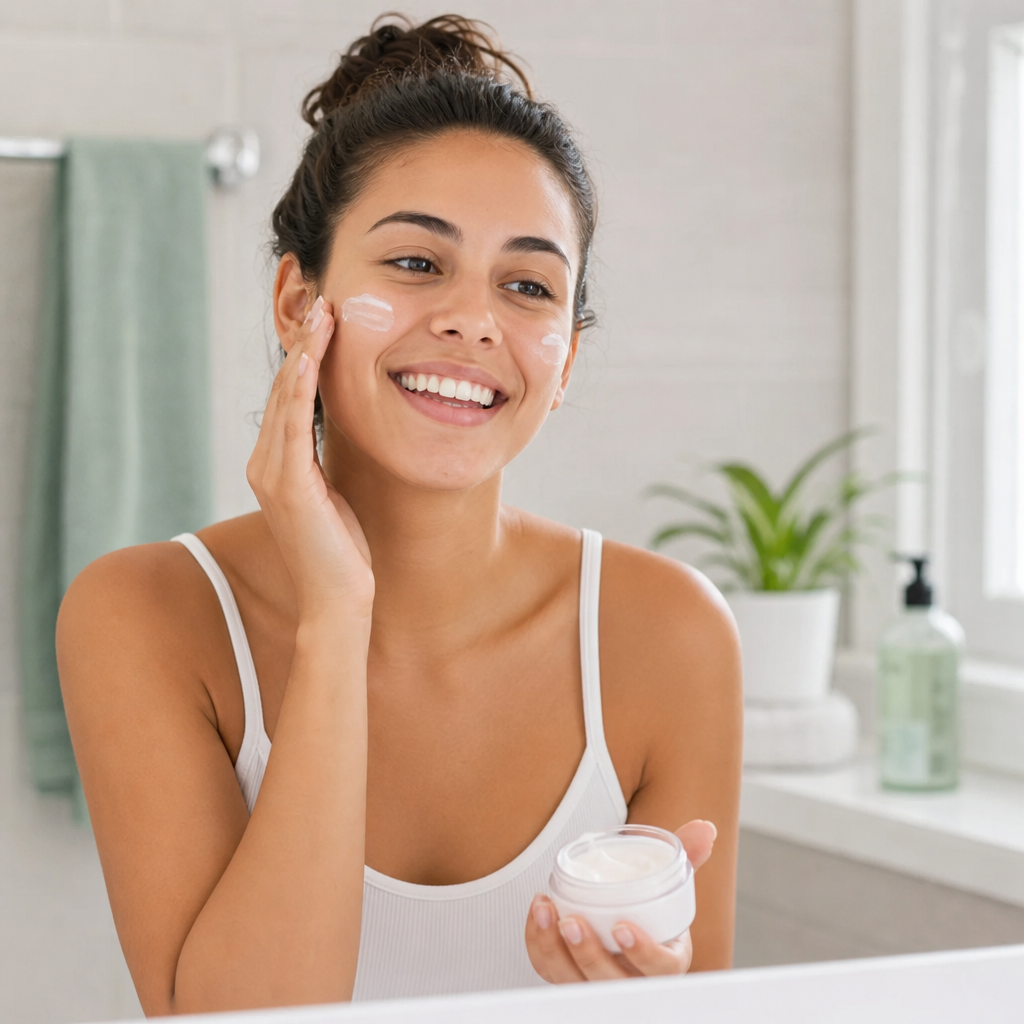
Step 1: The Foundation—Know Your Skin
Before you can build an effective routine, you need to know exactly what you are working with. Buying products blindly is a fast track to irritation and wasted money.
If you are wondering how to determine your skin type at home, the “bare-faced method” is incredibly reliable. Wash your face with a mild cleanser, gently pat it dry, and leave it completely bare for 30 minutes. After the time has passed, observe how your skin feels and looks:
- Dry: Your face feels tight, looks dull, or exhibits flaky patches.
- Oily: Your face looks shiny all over, particularly across the forehead, nose, and chin (the T-zone).
- Combination: Your T-zone is oily, but your cheeks feel tight or dry.
- Normal: Your skin feels comfortable, balanced, and neither overly oily nor tight.
- Sensitive: Your skin easily becomes red, itchy, or irritated, regardless of the oil levels.
Step 2: Building an Easy Skincare Routine
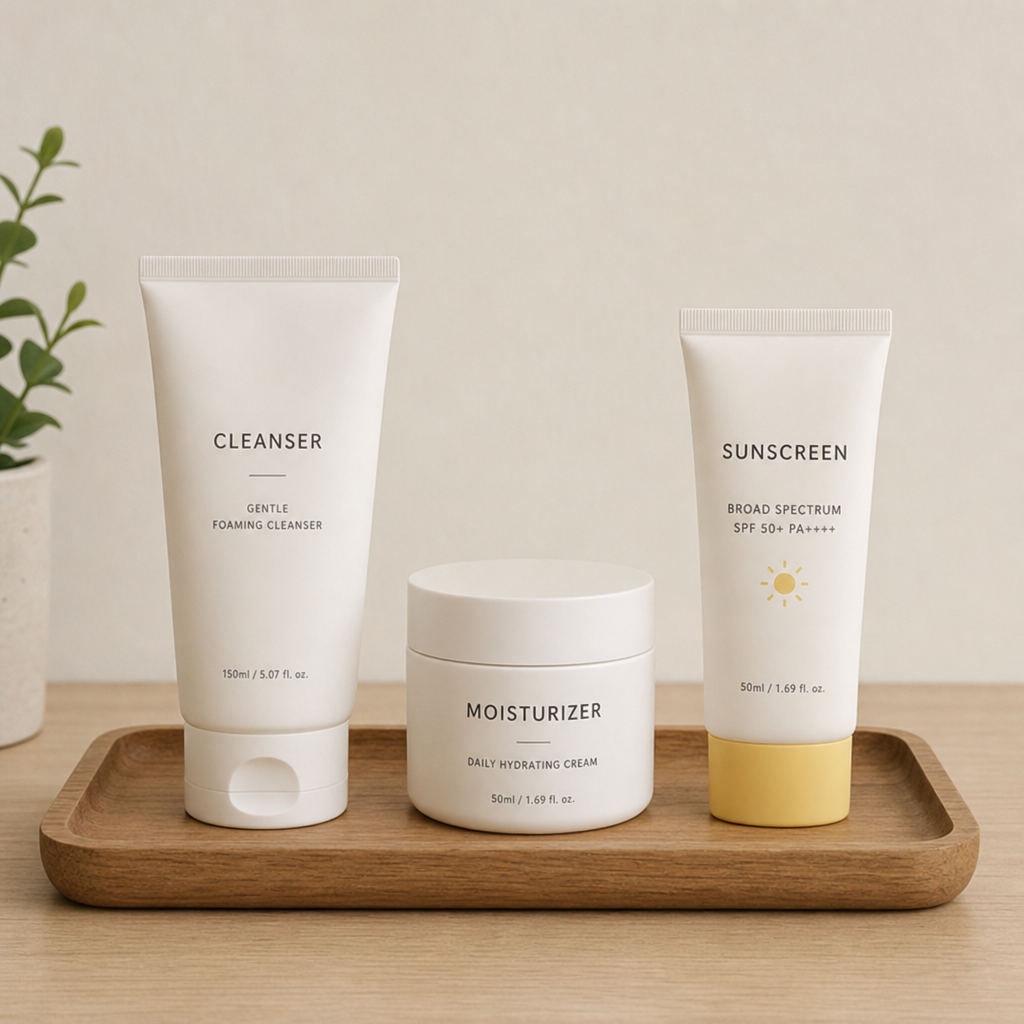
The beauty industry loves to sell complexity, but the truth is that the essential steps for a minimalist skincare regimen only require three actions: cleanse, moisturize, and protect. By establishing a basic morning and evening skincare routine, you create a healthy foundation that you can build upon later.
The Morning Routine: Prep and Protect
Your morning routine is all about preparing your face for the day and shielding it from environmental aggressors.
- Cleanse: Use a mild face wash to remove any sweat or oils accumulated overnight. If you are very dry, a simple splash of lukewarm water may suffice.
- Moisturize: Apply a light layer of moisturizer to lock in water and keep your face supple.
- Sunscreen: This is non-negotiable. Understanding why daily sunscreen application is necessary is perhaps the most vital lesson in skincare. UV rays cause premature aging, hyperpigmentation, and increase the risk of skin cancer. Apply a broad-spectrum SPF 30 or higher every single morning, rain or shine.
The Evening Routine: Cleanse and Repair
Your nighttime routine is focused on removing the day’s grime and allowing your cells to repair themselves while you sleep.
- Cleanse: Wash away makeup, sunscreen, and pollution. It is highly recommended to seek out gentle cleansers for sensitive skin, avoiding harsh foaming agents (like high levels of sulfates) that can strip away natural oils and leave your face feeling “squeaky” clean—a sign of over-cleansing.
- Moisturize: Apply a slightly thicker cream to support nighttime recovery and prevent transepidermal water loss while you sleep.
Step 3: Understanding Hydration vs. Moisture
One of the most common points of confusion for beginners is the difference between moisturizing and hydrating. While often used interchangeably, they perform two distinct functions.
- Hydrating refers to adding water to the skin cells to make them plump and bouncy. Ingredients that do this are called humectants. For example, the benefits of hyaluronic acid for hydration are widely celebrated because this powerful humectant can hold up to 1,000 times its weight in water, drawing moisture from the environment directly into your skin.
- Moisturizing, on the other hand, involves creating a protective barrier to lock that hydration in so it doesn’t evaporate. Ingredients that do this are called emollients and occlusives (like ceramides, squalane, and shea butter).
When shopping for these products, you will likely face the debate of fragrance-free vs scented skincare products. While a beautifully scented cream can feel like a luxurious spa experience, synthetic fragrances and even natural essential oils are common allergens. If you are prone to redness or breakouts, opting for fragrance-free formulations is always the safer bet.
Step 4: The Best Order to Apply Skincare Products
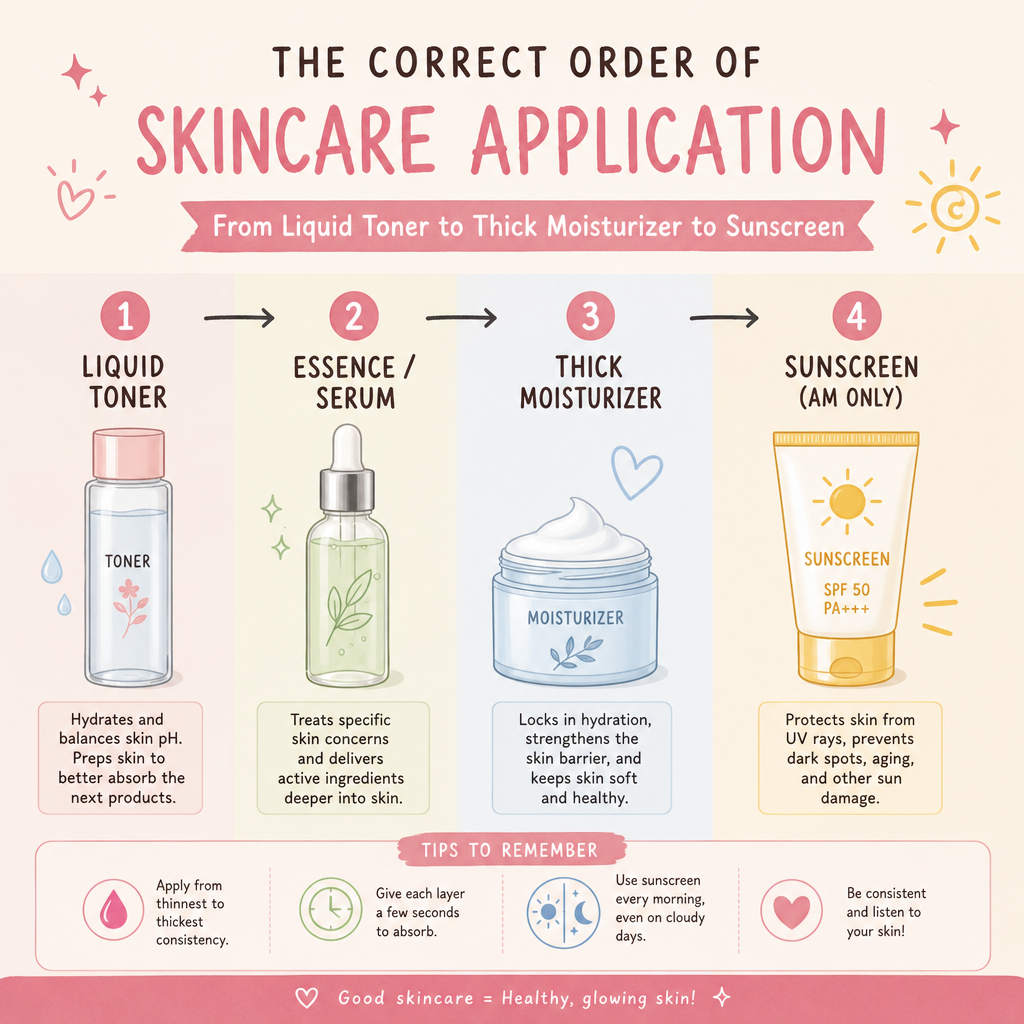
Once you start adding serums and treatments to your routine, applying them in the wrong sequence can render them entirely ineffective. The golden rule for the best order to apply skincare products is to go from thinnest to thickest consistency.
- Cleanser (Wash off)
- Toners/Essences (Water-like)
- Serums (Lightweight gels or liquids)
- Eye Cream (Lighter than face creams)
- Moisturizer (Thick lotions or creams)
- Face Oils (Oils penetrate creams, but creams cannot penetrate oils)
- Sunscreen (Morning only—always your final step)
Step 5: Leveling Up With Active Ingredients
Once your core routine is established and your complexion is balanced, you can introduce targeted treatments. Navigating active ingredients for beginner skincare can be tricky, so it is crucial to introduce these slowly, one at a time.
Exfoliation: Smoothing the Surface
Exfoliating removes dead cells, revealing a brighter complexion beneath. If you are confused by the options, here is a quick physical vs chemical exfoliation guide:
- Physical Exfoliants: These use tiny granules or brushes to manually scrub away dead cells. While satisfying, they can cause micro-tears if the particles are too abrasive.
- Chemical Exfoliants: These use gentle acids (AHAs like glycolic and lactic acid, or BHAs like salicylic acid) to dissolve the glue holding dead cells together. Chemical exfoliation is generally preferred by dermatologists as it offers a more uniform, gentle result.
Targeting Breakouts
If you struggle with blemishes, look for specific skincare ingredients for acne-prone skin. Salicylic acid (a BHA) is exceptional because it is oil-soluble, meaning it can penetrate deep into clogged pores to dissolve sebum and debris. Niacinamide is another fantastic option that regulates oil production and calms inflammation without causing dryness.
Brightening and Anti-Aging
To tackle dullness, dark spots, and environmental damage, Vitamin C is an absolute powerhouse. The primary vitamin C serum benefits for brightening include inhibiting melanin production (which fades dark spots) and acting as an antioxidant to neutralize free radicals caused by pollution and UV rays. Apply this in the morning before your sunscreen.
For nighttime, consider an introduction to retinol for beginners. Retinol (Vitamin A) accelerates cell turnover and stimulates collagen production, making it the gold standard for softening fine lines and improving texture. Because it can be highly irritating, beginners should start with a low concentration (around 0.25%) and use it only one or two nights a week, gradually increasing frequency as tolerance builds.
Step 6: Troubleshooting Your Routine
Sometimes, in our enthusiasm to achieve glowing skin, we overdo it. Using too many harsh scrubs or powerful acids can strip your natural defenses.
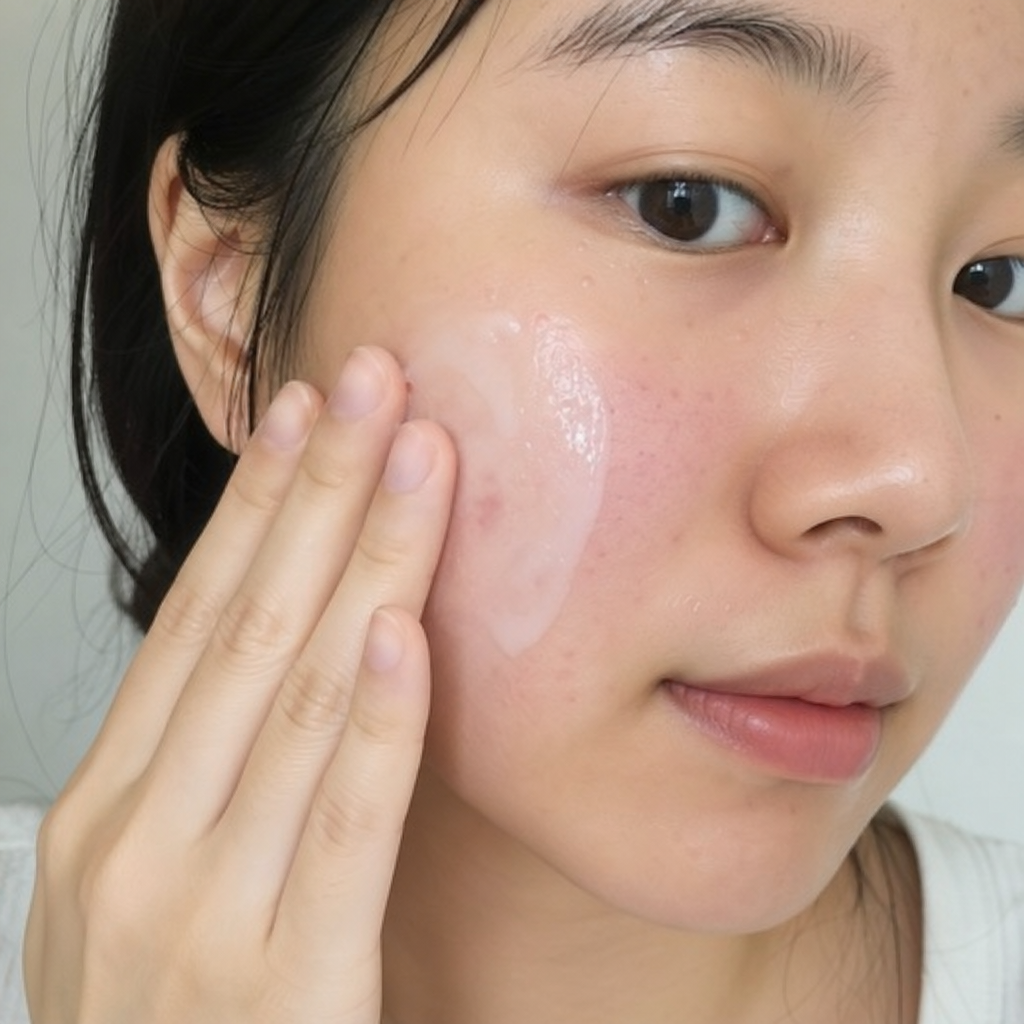
If your face suddenly feels tight, looks red, breaks out in tiny rashes, or stings when you apply your normally gentle moisturizer, you have likely compromised your skin’s protective outer layer. Knowing how to repair a damaged skin barrier is essential.
When this happens, immediately stop using all active ingredients, including vitamin C, retinol, and exfoliants. Strip your regimen back to the absolute basics: a gentle wash, a deeply nourishing moisturizer packed with ceramides and peptides, and sunscreen. Avoid hot water and give your complexion a few weeks to heal and rebuild its natural lipids before slowly reintroducing treatments.
Essential Skincare Tips for Beginners
To guarantee long-term success, keep these final skincare tips for beginners in mind:
- Patience is Key: A full skin cycle takes about 28 days, and collagen production takes even longer. Give any new product at least 4 to 6 weeks of consistent use before deciding if it works.
- Always Patch Test: Before slathering a new active ingredient all over your face, apply a small amount to your inner forearm or behind your ear. Wait 24 hours to ensure you don’t experience an allergic reaction.
- Less is More: A carefully curated, easy skincare routine that you stick to consistently will always yield better results than a complex, 12-step regimen that you only complete once a week.
- Listen to Your Skin: Your skin’s needs will fluctuate with the seasons, your diet, your stress levels, and your hormones. Be prepared to swap a lightweight lotion for a richer cream in the winter, or scale back on exfoliation during stressful weeks.
The Takeaway
Starting a new cosmetic regimen doesn’t have to be an intimidating chore. By sticking to the principles outlined in this guide, you can confidently navigate the beauty aisles and select products that truly benefit you. Remember that the ultimate goal is not perfection, but rather a healthy, resilient, and protected complexion. Start with your basics, introduce new ingredients gradually, never skip your sunscreen, and enjoy the transformative journey to your best skin!